Four years is the right age for a cow
Almost all British beef is killed at two. Here is what happens to the flavour if you wait, and what it costs to wait.
Nell Prideaux
· Head chef
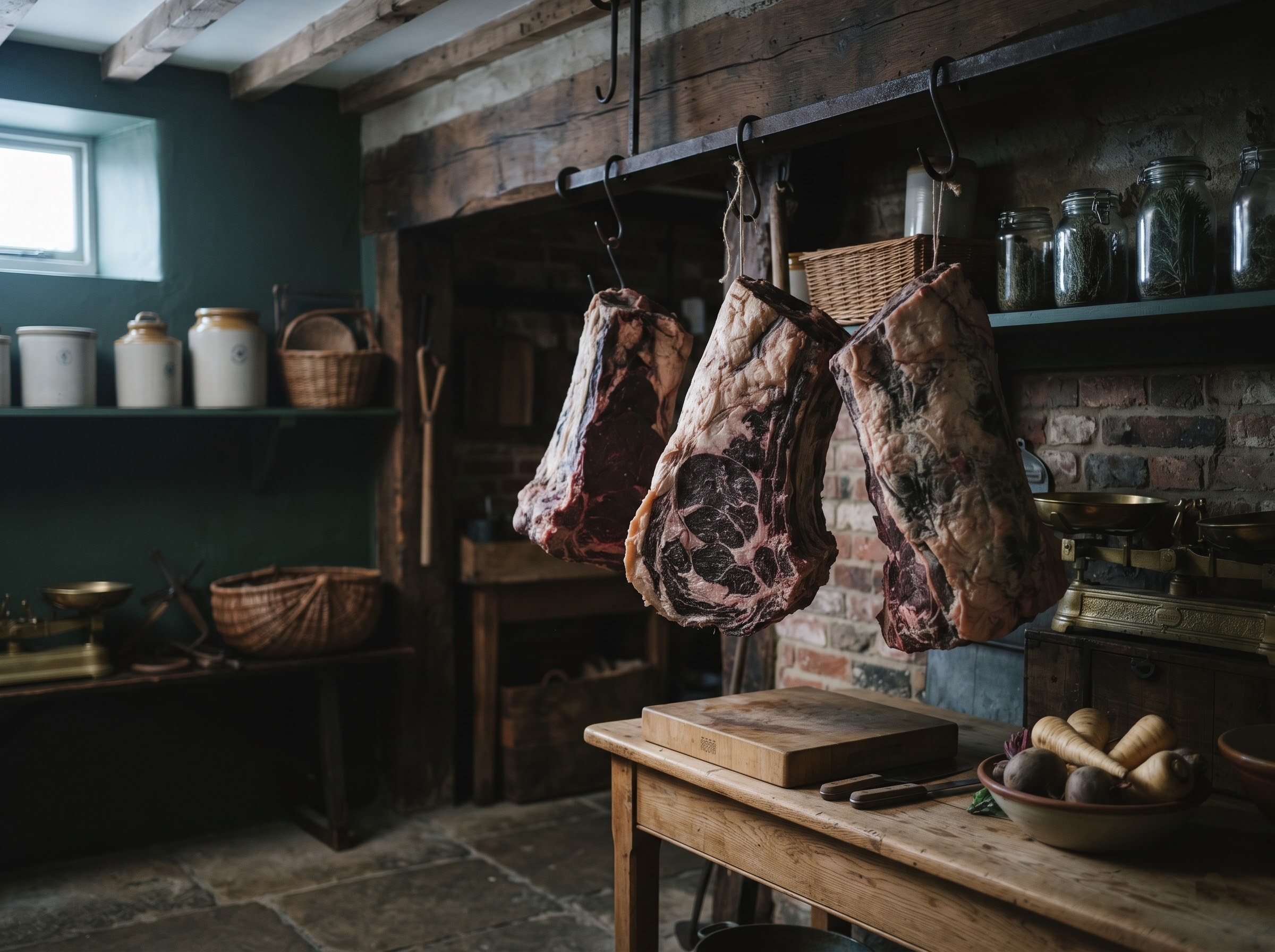
Almost all British beef is killed at somewhere between twenty and twenty-six months. There is nothing sinister about it: a two-year-old animal has converted feed into meat efficiently, it has not cost a second winter of housing, and it will grade well against a chart that was written to reward exactly that. The system works precisely as designed.
The Longhorns at the Coppice Herd are four. They spend that time on woodland pasture eating a great many things that are not grass, and they put on weight slowly enough that the fat goes through the muscle rather than sitting in a seam around the outside. That is the whole difference, and you can see it before you taste it.
What the extra two years actually buys
Colour, first. A four-year-old carcass is dark, closer to brick than to pink, and people who have only met supermarket beef sometimes think it has gone off. Then fat, which is yellow rather than white because the animal ate green things in daylight. Then, after five weeks hanging, a flavour that is closer to cheese or cured ham than to what most people mean by beef.
It costs roughly twice as much per kilo and there is half as much of it. We buy a side at a time and work through it, which is why the beef dish changes shape across a month: sirloin while there is sirloin, then bavette, then shin when we get to the end. Nobody has ever sent back the shin.
Why this is not a moral argument
We are not going to tell you that eating this beef is virtuous. It is beef. What we will say is that if a kitchen is going to put an animal on a plate, the case for doing it four or five times a year with something that lived well and tastes extraordinary is a great deal stronger than the case for doing it four times a week with something that did neither.